
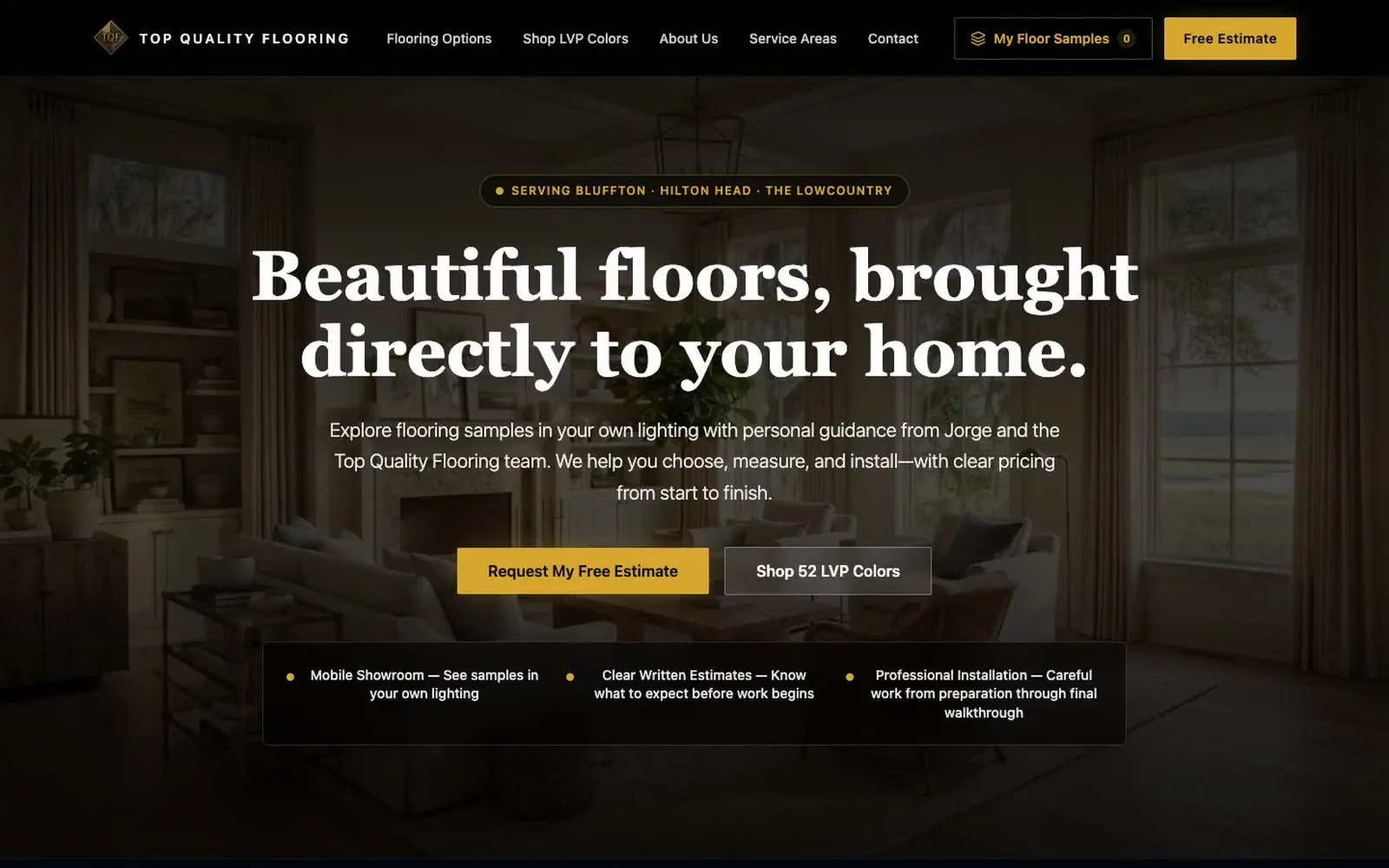
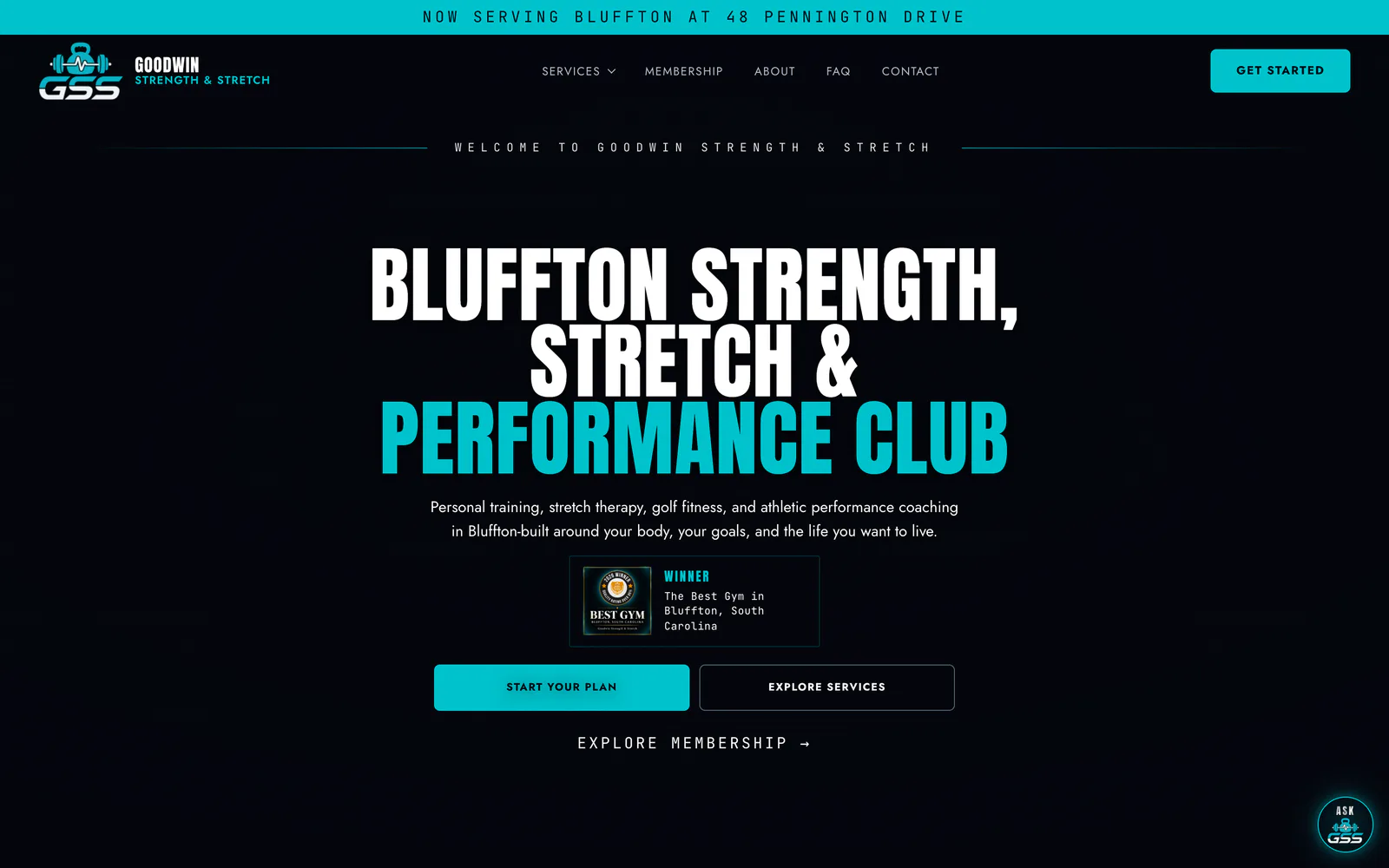

Conversion-Focused Design
Clear messaging hierarchy, strong calls to action, and a layout built to move visitors toward contact.

WebsiteCoastal Solutions Media
Website design and conversion means building a fast, mobile-first site that turns visitors into calls, form submissions, and booked jobs, not just a digital brochure. Coastal Solutions Media designs and develops conversion-focused websites for service businesses in the Lowcountry and nationwide, with search structure and CRM integration built in.
Website design and conversion is the discipline of building a site that does two jobs at once: represents your business well, and actively moves visitors toward contacting you.
Most business websites are built for looks alone. We build for both: premium visual design plus the technical and structural decisions (speed, clarity, calls to action, mobile usability) that determine whether a visitor actually converts.
A converting service-business website tells visitors within seconds what you do, where you do it, and how to reach you. It loads fast on a phone, keeps the phone number and booking action visible on every page, backs claims with real proof, and sends every form straight into a CRM so no lead waits for a reply.
Design matters, but it serves the decision. Most visitors arrive with one question, such as "can this company fix my problem soon," and leave if the answer is buried. We structure each page around that question first and the brand story second.
Google's Core Web Vitals give a clear target: the largest content on the page should render within 2.5 seconds, the page should respond to taps within 200 milliseconds, and layout shift should stay below 0.1, measured for at least 75 percent of real visits. Meeting those thresholds on mobile is the baseline we build to.
Speed is a ranking consideration, but its bigger effect is on people. A slow page loses visitors before they read a word. We control it with optimized images, minimal third-party scripts, font loading discipline, and server rendering, then verify it with field data rather than a single lab test.
Search engines and AI assistants understand a site through its HTML. One clear H1 per page, logical H2 and H3 headings, content rendered on the server instead of only in JavaScript, structured data that describes your business and services, and internal links between related pages all make your site easier to rank, quote, and cite.
Many AI crawlers do not execute JavaScript, so a site that looks complete in a browser can look nearly empty to them. Every site we build ships its core copy and JSON-LD in the initial HTML, with an XML sitemap, canonical tags, and a robots.txt that allows the search crawlers you want.
At minimum: a dedicated page for each core service, pages for the areas you serve, an about page that names the people behind the business, real photos of your work, visible contact options on every page, a short quote or booking form, clear proof such as reviews, and the analytics to know which pages produce leads.
The cost of waiting
A slow or confusing website loses visitors before they ever consider calling. Most people leave in seconds if a site is hard to use, and that traffic rarely comes back. Every improvement in speed, clarity, and calls to action compounds across every visitor you already have.
Every engagement is scoped to these deliverables, built and reported as one system.
Clear messaging hierarchy, strong calls to action, and a layout built to move visitors toward contact.
Fast, responsive pages that work well on the phone, where most local searches happen.
Optimized images, minimal render-blocking scripts, and fast load times.
Proper headings, labels, and contrast so the site works for every visitor and for search engines.
Forms that route directly into your CRM with source tracking, not a black hole inbox.
Form submissions, phone clicks, and key actions tracked from day one.
See which of these your business needs first.
Get My Free Growth AuditLargest Contentful Paint, Interaction to Next Paint, and Cumulative Layout Shift from real-user field data.
Calls, form submissions, and bookings divided by visits, page by page.
Tap-to-call and booking actions tracked as events in GA4.
Started versus submitted forms, so friction gets found and removed.
Every lead tagged with its source and landing page inside CoastaFlow.
Which pages earn search entries and how those visitors convert.
We review your current site (or starting point) for speed, clarity, and conversion gaps.
We design pages around your services, proof, and calls to action, not a generic template.
We develop a fast, mobile-first site with tracking and CRM integration built in from the start.
We monitor real performance and refine based on how visitors actually behave.
We design with the Lowcountry customer in mind: mobile-heavy traffic, fast decision-making, and a preference for businesses that look established in Hardeeville, Bluffton, Hilton Head Island, Beaufort, and Savannah.
Coastal Solutions Media is based in Hardeeville, SC and works in person across the Lowcountry and coastal Georgia. Strategy, implementation, and reporting are delivered remotely, so we also support clients nationwide.
It depends on scope, but most service-business sites take a few weeks from approved design to launch. We'll give you a specific timeline once we know what the project actually involves.
Yes. Every site we build is mobile-first, since most local searches and calls happen from a phone. We test across common breakpoints before launch, not just on a desktop monitor.
We build with modern, fast frameworks suited to the project rather than defaulting to a page-builder platform that tends to slow down over time. The right choice depends on your site's complexity and content needs.
It should not, if it is handled correctly. We map every existing URL, keep the ones that earn traffic, and set direct 301 redirects for anything that moves, then monitor Search Console after launch. Rankings are usually lost through skipped redirects and deleted content, not through the redesign itself.
We follow established accessibility practices: semantic headings, labeled form fields, keyboard navigation, visible focus states, sufficient color contrast, and descriptive alt text. Accessible sites also tend to be easier for search engines and AI systems to parse.
Yes. Design, development, and launch are handled remotely, so we build for businesses nationwide. Lowcountry clients can also add on-location photography, video, and drone footage from our in-house team.
Next step
We'll show you exactly where the gaps are and what a connected system looks like for your business.